057 when starting over becomes necessary
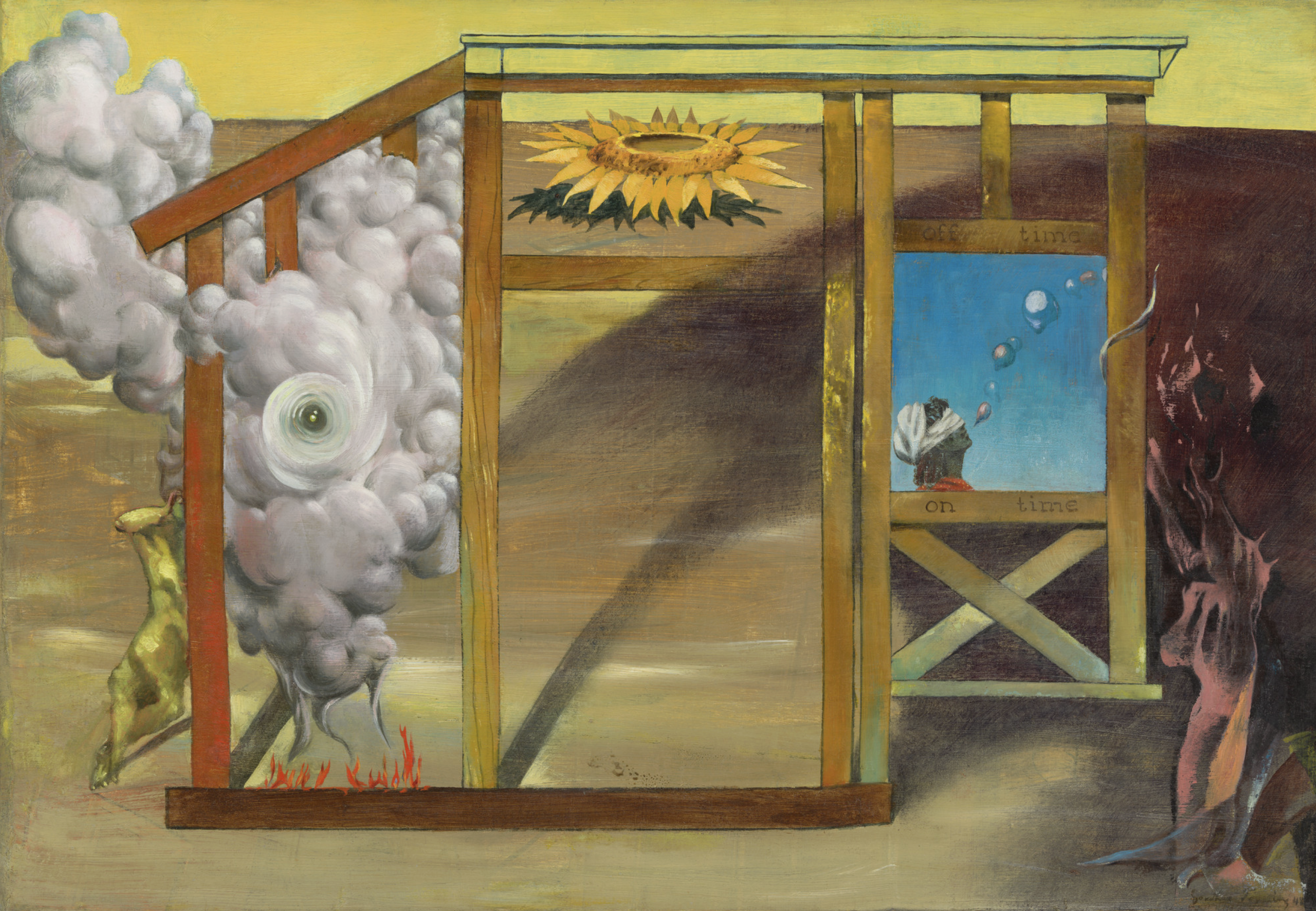
Dorothea Tanning, On Time Off Time. 1948
I was out with my friend yesterday, and the topic of restarting your life came up. Many people in my life, myself included, are going through significant transitions. Sometimes we are the ones who decide it’s time for something to change. Other times, life makes the decision for us. We talked about how sometimes you just need to burn everything down in order to finally restart.
When we think about healing, we often imagine adding something to our lives. Becoming more confident. More resilient. More comfortable with who we are. But sometimes growth begins with taking something away.
There are moments when you realize that the life you built no longer fits the person you are becoming. Maybe it’s a relationship you’ve outgrown, a career that no longer feels meaningful, or an identity you’ve carried for so long that you’ve stopped questioning whether it actually belongs to you. I see this often with my clients. We can become so invested in the lives we’ve created that we keep trying to fix them, even when something deeper is telling us that the problem isn’t the cracks. It’s the foundation.
This is where starting over gets difficult. From the outside, leaving a relationship, changing careers, setting boundaries, or questioning what you’ve always believed can look impulsive or even reckless. From the inside, it can feel like failure. You might wonder why you can’t just make things work or why you’re suddenly dissatisfied with something you once wanted so badly.
But sometimes the discomfort isn’t a sign that you’re making the wrong choice. It’s what happens when you stop living according to what is familiar.
We tend to hold onto familiar things because they give us a sense of certainty, even when they aren’t making us happy. The unknown asks us to trust ourselves without knowing exactly what comes next. That can be terrifying. It can also be where we begin to understand what we actually want.
And there is usually grief involved. Starting over means saying goodbye to more than the thing itself. You might be grieving the future you imagined, the person you thought you would become, or the version of your life that you spent years working toward. Even when you know something needs to change, you can still miss what you’re leaving behind.
I think this is why the in-between can feel so uncomfortable. Your old life is no longer yours, but your new one hasn’t fully taken shape. There is nothing to fix or figure out yet. You just have to sit in the uncertainty for a while. Maybe that’s not a failure of the process. Maybe it’s part of it.
Nature has its own way of reminding us that endings can create the conditions for something new. Things decompose and return to the earth, becoming part of what eventually grows. Not everything that falls apart needs to be saved. Sometimes something has to make space before something else can take root.
Perhaps starting over becomes necessary when we realize that continuing to maintain something is costing us more than letting it go. That doesn’t mean we have to destroy everything in one dramatic moment. Sometimes it simply means being honest about what no longer works and giving ourselves permission to stop forcing it.
Starting over can be painful. It can be lonely and confusing, and sometimes it can feel like you’ve lost more than you’ve gained. But there can also be something deeply freeing about realizing you are allowed to change your mind, outgrow what you once wanted, and build a life that makes sense for who you are now.
You don’t always need to know what you’re building next. Sometimes the first step is simply admitting that you’re ready to stop rebuilding the same thing.